
Introduction
One of the most sensitive and important sectors in any country that directly affects the quality of health services is medical education. Bangladesh has taken many steps to improve the quality of medical institutions in recent years.
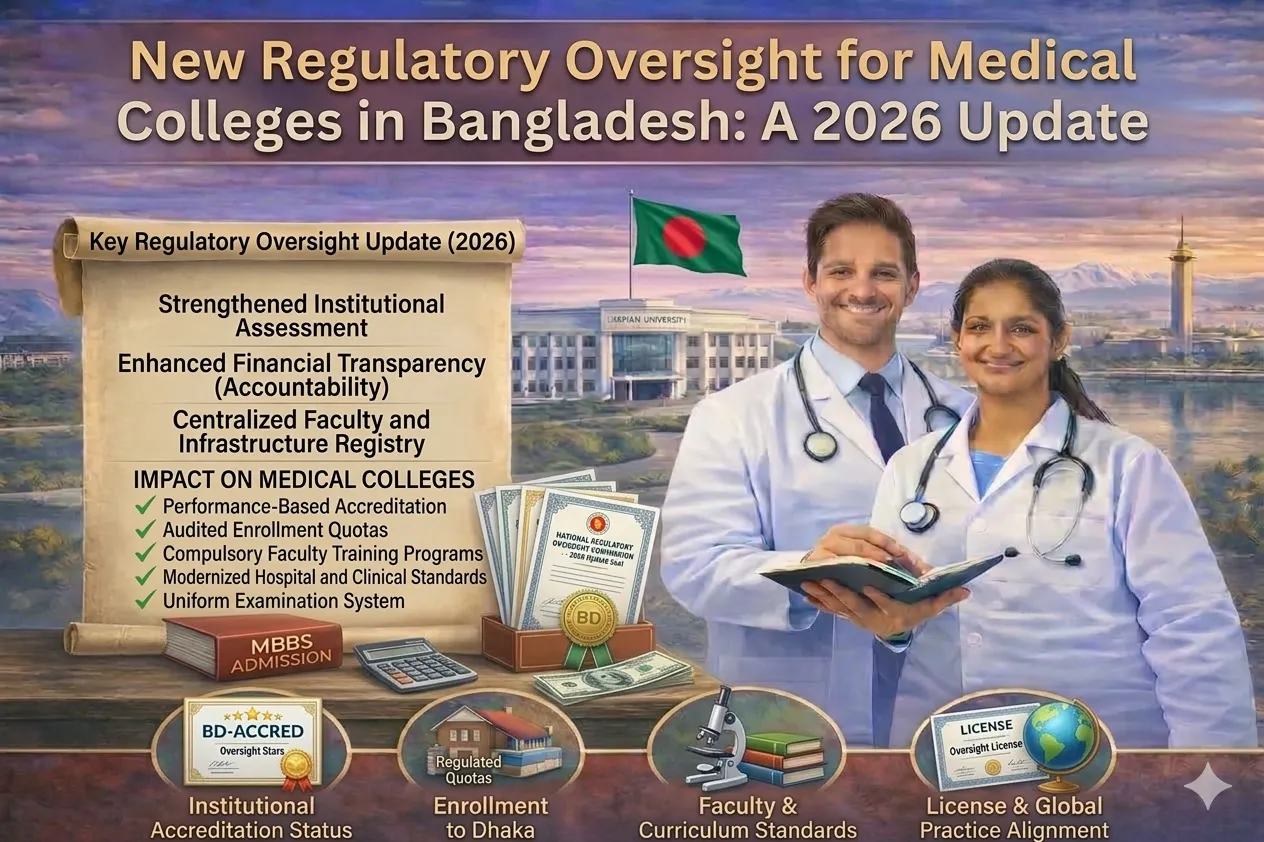
The country implemented tighter regulatory monitoring systems in 2026 in the hopes of making medical colleges more transparent, academically sound, and responsible.
This is especially significant for international students who come to Bangladesh for medical education. Due to their low-cost education system and internationally acclaimed medical programs, MBBS in Bangladesh is popular among South Asian and other students.
And Why It Needs Government Oversight
- Medical education must be closely regulated as it crafts professionals responsible for patient care and public health.
- Without proper regulatory systems, institutions risk failing to maintain quality required for professional medical training.
- Bangladesh has seen a rapid increase in medical colleges over the last 20 years. While this improved access, it also created institutional quality assurance issues.
- In response, the government established a framework to ensure proper academics, well-maintained infrastructure, and sufficient clinical exposure for students.
Highlights of the 2026 Regulatory Oversight Update
- Institutional Inspections: Regular inspections check infrastructure such as lecture halls, laboratories, libraries, and teaching hospitals.
- Faculty Assessment: Colleges must employ professional professors and clinical instructors with experience to train potential doctors.
- Student–Teacher Ratio: Ensures students receive adequate attention and academic support.
The new regulations are essential to maintain uniform standards throughout Bangladesh.
Emphasis on Clinical Instruction and Hospital Amenities
- Clinical experience is a vital part of medical education. Students must interact with patients and learn real-world medical cases.
- Regulatory control emphasizes quality in teaching hospitals attached to colleges.
- Officials assess hospital infrastructure, medical equipment, patient flow, and supervision by trained doctors.
- Ensures students are exposed to real healthcare settings and gain practical skills for medical practice.
- Quality clinical training is a key benefit for international students studying in Bangladesh.
Strengthening International Recognition
- The new oversight system aims to enhance Bangladesh’s international credibility in medical education.
- WDOMS (World Directory of Medical Schools) lists many Bangladeshi colleges, allowing graduates to apply for licensing exams and postgraduate training abroad.
- Stricter regulatory monitoring ensures institutions meet global standards.
- This benefits international students seeking reliable medical training for careers abroad.
Importance for Indian Medical Students
- Indian students form one of the largest foreign student groups in Bangladesh.
- Thousands of NEET-qualified Indian students choose Bangladeshi medical colleges annually.
- Regulatory policies are important to ensure compliance with NMC guidelines for practicing medicine in India.
- Oversight ensures appropriate program duration, clinical training hours, and internship requirements.
- Compliance helps graduates retain qualifications for licensing in India.
Development in Infrastructure and Educational Facilities
- Regulatory authorities focus on upgrading classrooms, laboratories, libraries, and digital learning resources.
- Modern medical education requires access to updated learning materials, advanced medical equipment, and research facilities.
- Students gain practice in laboratory techniques, diagnostics, and medical research.
- Colleges not meeting standards may be required to upgrade amenities before admitting new students.
Greater Transparency for Students
- Regulatory oversight improves transparency in the medical education system.
- Students and families can identify which colleges maintain rigorous academic standards.
- Frequent vetting and accreditation assure students of the institution’s credibility.
- Transparent updates help international students compare local education standards.
Alignment With Global Healthcare Standards
- Global healthcare systems evolve rapidly due to technology, research, and medical advances.
- Medical education must adapt so future doctors are prepared for contemporary challenges.
- Bangladesh’s revised regulatory framework aligns education with international standards.
- WHO-supported initiatives emphasize high-quality training programs to produce skilled healthcare professionals.
Impact on Future MBBS Admissions
- Higher-quality institutions attract more international students.
- Colleges failing to meet standards may face restrictions or required upgrades.
- Ensures continuity and progress in medical education.
- Students pursuing MBBS benefit from improved academic and clinical facilities.
Long-Term Benefits for Medical Students
- Ensures consistency in education across institutions.
- Promotes infrastructure and resource improvement in medical colleges.
- Enhances international recognition of Bangladeshi medical degrees.
- Better training leads to better opportunities and readiness for medical practice.
Conclusion
The stronger regulatory oversight proposed in 2026 is a positive step toward improving the quality of medical education in Bangladesh.
- Regular inspections and evaluation of infrastructure ensure high academic standards.
- Reforms enhance the country’s medical education quality and assure international students of reliability.
- Ongoing improvements in infrastructure make Bangladesh a trusted destination for affordable medical studies.