
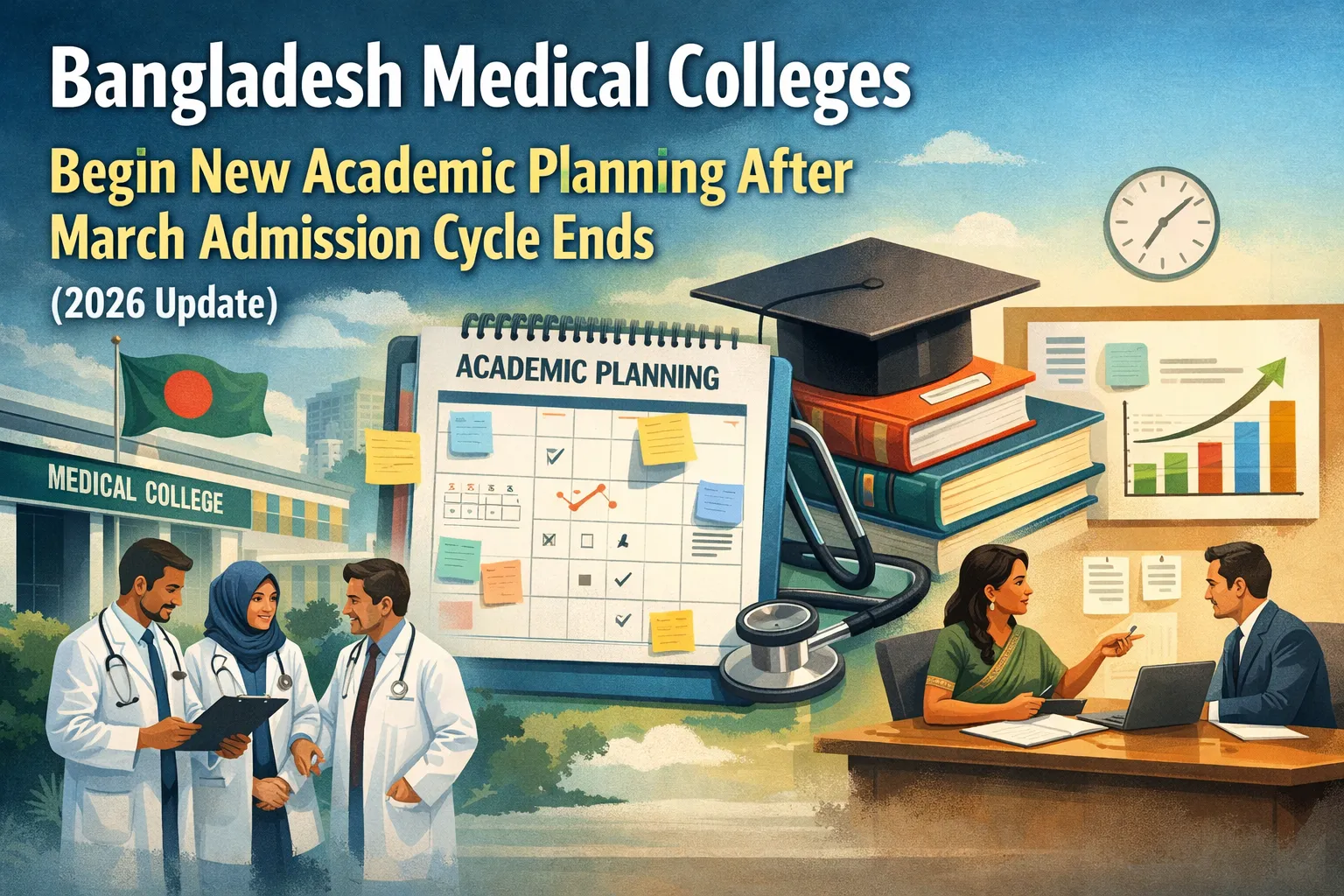
As March admission cycle for 2025–26 session comes to an end medical colleges across all Bangladesh has now shifted their focus towards the academic planning for the new MBBS batch The stretch between the two is a crucial time for transition from admissions to academic structure, ensuring that institutions are well-prepared to start the new session.
This stage is very important for international students, particularly if they are looking at MBBS in Bangladesh. This paradigm reflects the level of meticulousness and preparedness of the medical education system in Bangladesh, especially after undergoing an admission cycle that is competitive and highly demanded.
And the plan for action, a deeper understating coordination of responsibilities, buildings to be readied, and clinical training locations to align is all behind the scenes work that ultimately shapes what happens on day 1 of medical school.
Shifts From Admissions to Academy
The admission process closes in March, and with it, the preparation for the academic year ahead begins for all medical colleges. Such activities are centered around verifying student documents, confirming students on class lists and running orientation programs for newcomers.
Colleges also follow all admission procedures in compliance with regulatory requirements. Before final enrollment is confirmed, many institutions vet student eligibility, academic records and international admission guidelines compliance.
Educational institutions often have a formal onboarding process which helps the students understand academic and campus facilities and institutional rules effectively.
New MBBS Students — Orientation Programs
Orientation programs are organized soon after admissions, as the first step. During these sessions students will be introduced to the colleges, faculty members and academic systems.
Orientation programs typically cover:
- Overview of the MBBS curriculum
- Introduction to departments and faculty
- Guidelines for academic conduct
- Details regarding hostel facilities and student services
Orientation programs for international students also cover information about cultural adaptation, local laws and everyday life in Bangladesh.
These very first few sessions get students comfortable in their new habitat and also is the great transition to learning side of things.
Curriculum Planning and Academic Scheduling
Medical colleges prepare detailed plans for new academic session after closing the admission cycle.
In Bangladesh, the curriculum of the MBBS programme is a comprehensive blend of theoretical knowledge supplemented by practical experience. The overall coordination of the classes such as lecture points, lab sessions, and internal assessment plans is done by academic departments.
Secondly, the faculty routinely reviews what to include in courses based on current standards and updates for medical school education.
This systematic arrangement is advantageous for the students who are studying MBBS in Bangladesh, as it ensures the commencement of the academic activities without any delay.
Faculty Coordination and Resource Allocation
Faculty coordination is another key aspect of academic planning. In medical colleges, teaching responsibilities for professors, lecturers, and clinical instructors assigned according to their area of expertise.
There must also be a check of the adequacy of faculty to tackle the portfolio as every batch needs qualified teachers to cater for them.
Colleges, on the other hand, allocate resources like laboratories, lecture halls and teaching materials. Data until October 2023, only.
Preparation of Clinical Training Facilities
One of the vital parts of MBBS program is clinical trainings. Once admissions are finalized, medical schools work with their affiliated teaching hospitals to get ready for clinical training sessions.
The Institutes affiliated with Medical University act as real field exposure to students. During their training, students also observe patient care, take part in clinical discussions and gradually gain practical medical skills.
Hospitals have been assured that they will be able to manage the flow of patients and provide the facilities necessary for training students.
This emphasis on clinical preparation is one of the reasons why MBBS in Bangladesh is one of the options that many students choose for their medical education.
Compliance With Regulatory Standards
In Bangladesh, medical colleges have no option but to comply with regulatory guidelines while preparing their academic sessions.
Institutions ensure academic structure is in line with national medical education policies and international standards.
A lot of students check if the university they chose is listed in global medical directories such as World Directory of Medical Schools (WDOMS).
Moreover, the call for maintaining strong medical education systems to address global healthcare needs is reiterated by organizations such as the World Health Organization (WHO).
Indian students also take into serious account guidelines by National Medical Commission (NMC) for pursuing studies abroad.
These are critical for students who are seeking to pursue careers in medicine after graduation.
Prioritization Of Academic Excellence And Student Services
Not only in the admission cycle, the medical colleges make efforts to reflect quality of education and support system for students.
Educational establishments evaluate what their teaching methods to align with learning materials and introduce strategies that improve student performance.
In this time, support services like counseling, mentorship programs, and academic guidance are also reinforced.
These support systems are essential because as an International student, transitioning into a new academic environment becomes easy.
Planning for Examinations and Assessments
Academic planning also involves preparing for the internal assessment and professional exams.
Medical colleges develop educational evaluative systems to assess theoretical knowledge and clinical practices.
Frequent evaluations allow students to monitor their own advancement and detect areas in need of establishing.
Institutions keep up the strict system of examination to ensure that students remain focused on their academic excellence.
Implication for 2026 MBBS students
For those who were admitted in season 2025–26, the conclusion of the admission cycle paves the way for a well-structured path to academic success.
All students can start studying without confusion or wasting time due to that structured planning done by medical colleges.
Prospective medical students in 2026 applying for MBBS admission to Bangladesh are likely to face:
- A seamless transition to the academic world
- Well-planned course schedules
- Access to clinical training facilities
- Guidance from experienced faculty members
These factors help create a consistent and supportive learning environment.
Conclusion
The closing of the March admission cycle marks the start of another phase for medical colleges in Bangladesh. With academic planning, allocation of faculty and prepping the clinical training set-up to welcome a fresh batch of MBBS students now taking precedence at institutions.
This structured approach is particularly beneficial for international students, especially those seeking to pursue MBBS in Bangladesh, underlining the country’s dedication and commitment to ensuring an organized yet quality learning environment.
When planned correctly, and with all regulatory requirements met with strong academic support systems, Bangladesh is increasingly emerging as a reliable destination for medical studies.
An educational atmosphere that is conducive to academics and practical learning in medicine will be a welcome sight as the academic term of 2026 embarks.