
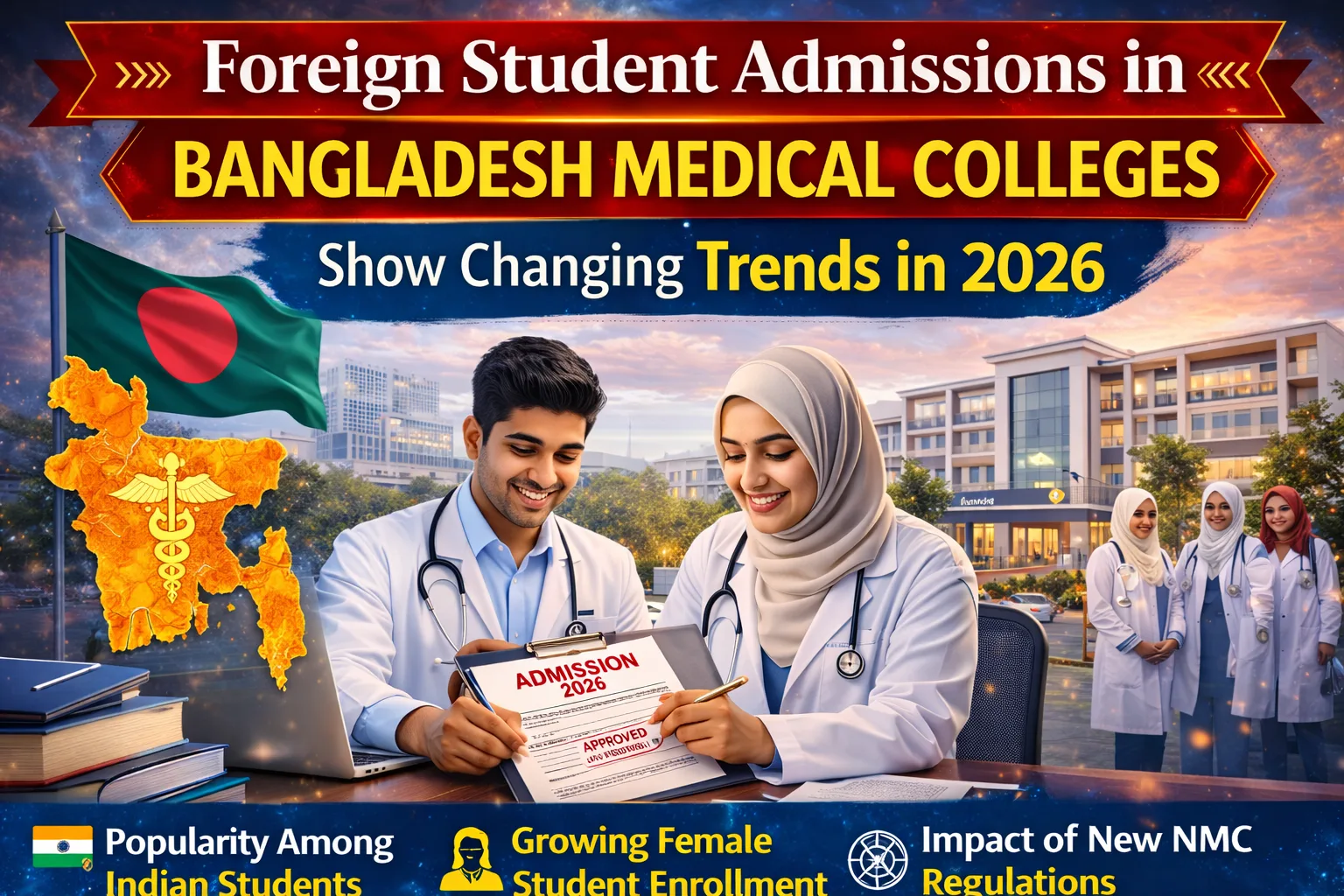
2026: The age of International Medical Education in Bangladesh The country has gradually drawn foreign students to its medical colleges over the last ten years, and as we have observed the recent admission cycles, there is one common thing that every international student seems to follow while being enrolled in MBBS programs.
Medical education in Bangladesh has emerged as a popularly known destination throughout the world, due to its highly academic compatibility with South Asian educational systems, availability of English medium instruction and low costs. Therefore, MBBS in Bangladesh is still one of the most preferred options among thousands of international applicants every year.
In short, the admission patterns for foreign students are dynamically changing in 2026 due to policy changes, shifts in seat allocation policies, and increasing global demand for medical education.
Explore Rising International Attention to Bangladesh Medical Colleges
Bangladesh's medical colleges have been admitting students from many countries, mostly neighboring South Asian nations. International students often hail from India, Nepal, Bhutan, Sri Lanka and various African nations.
Most of the Bangladesh institutions have a percentage of MBBS seats reserved for international students. This reserved quota prevents classrooms from becoming homogeneous and also provides opportunities for students coming in from neighbouring countries to pursue medical education.
Thus a reserved international quota often reminds students about the more accessible process of this admission, particularly for options like MBBS in Bangladesh, as compared to many high intensity competitive processes worldwide.
Increasing Participation of Indian Students
Bangladesh is a popular destination for medical education among foreign students, and Indian students make up one of the largest contingents.
Mainly due to the similarities between medical education of both countries in India and Bangladesh. Their curricula frameworks, examination styles and clinical training formats are quite similar.
Language should not be a barrier for international students as most of the medical colleges in Bangladesh also teach the MBBS program in English.
Students also check whether their selected medical university is included in the World Directory of Medical Schools, one of the major international databases for recognised medical institutions.
All these factors combined progressively leads to the increment in Indian students enrolling under Bangladeshi medical colleges.
Policy Adjustments Affecting Foreign Admissions
A second notable trend in 2026 is that admission policies for international students are becoming more flexible.
In Bangladesh, admissions are primarily controlled by government authorities and medical education organizations. It is usually determined by academic scores in the science subjects at the secondary and higher secondary levels.
Simultaneously, the government has been reassessing application timelines to better facilitate international applicants.
These changes were made in an effort to make the admission process more efficient and also ensure that students meet all academic requirements.
The World Health Organization is another entity driving international medical education standards across countries to strengthen healthcare education systems.
Expansion of Medical Education Infrastructure
Bangladesh, too, is ramping up medical education infrastructure in response to demand.
New Government and Private medical colleges are being established gradually around the country. In the next few years, these institutions are likely to enhance the number of MBBS admissions offered.
Simultaneously, the authorities are striving to uphold academic standards among all medical colleges.
Students may want to practice medicine internationally after graduation, and proper regulation and oversight of medical education is important to facilitate this.
Changing Preferences Among International Students
More informed when choosing which universities they would like to apply for students studying medicine abroad 2026.
So, with rising tuition fees, instead of solely relying on the tuition fees only,students are moving onto look at factors like:
- Quality of clinical training
- Availability of teaching hospitals
- International recognition of medical degrees
- Opportunities for licensing examinations
Thus, if you plan to practice in India after your studies, students also check if their degree will be compliant with the eligibility criteria prescribed by regulatory councils like the National Medical Commission.
This is why selecting the right medical university has become a prominent choice for international applicants.
Increasing competition for medical education destinations
With a growing number of competitors entering the global medical education market.
So many countries are now growing their medical education sectors to bring in international students.
Bangladeshi medical institutions, however, have been revamping their academic infrastructure and hospital training facilities to be at par with MBBS institutes in foreign countries.
This endows Bangladesh further solidifying to be a trusted land for medical education.
Many students aspiring to study MBBS in Bangladesh evaluate a range of factors including cost-effectiveness, educational structure and cultural familiarity before finalizing their decision.
Future Outlook for International Admissions
The patterns seen in 2026 show that medical education in Bangladesh is further evolving into an overseas education hub.
The increasing demand for healthcare professionals globally needs accessible and quality medical education.
Bangladesh has well-known universities, organized MBBS programs, and a large international student hub; thus Bangladesh is expected to stay as one of the desired destinations for medical aspirations abroad.
Conclusion
In 2026, there are visibly different foreign student admissions in the medical colleges of Bangladesh. A surge in global demand for medical education, changes in admission policies and a growing medical infrastructure are among the factors driving these changes.
MBBS in Bangladesh still serves as an attractive choice for international students seeking affordable and accredited medical degrees.
Bangladesh's sustainable growing role in worldwide medical education seems to follow the inclusion through global platforms like World Directory of Medical Schools and consistent with universal medical schooling standards supported by global fitness organizations and national scientific commission.