
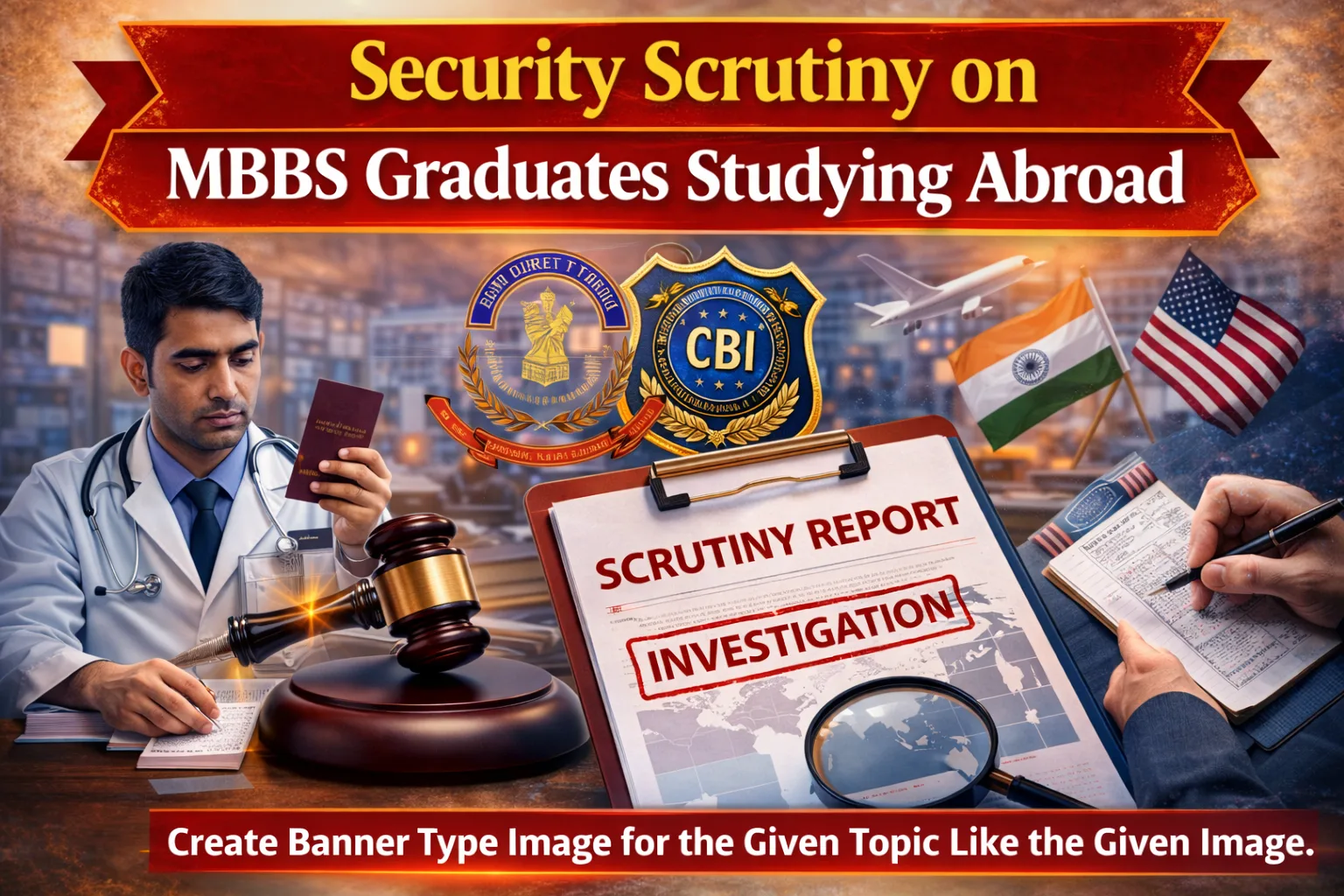
In recent years, one topic has quietly entered conversations around foreign medical education — security scrutiny.
Parents often ask:
- Will my child face background checks after studying abroad?
Students wonder:
- If I complete MBBS outside India, will that affect my medical license approval?
With rising global migration, stricter visa systems, and tighter professional regulations, governments worldwide are strengthening verification systems — especially in sensitive sectors like healthcare.
So what does this actually mean for Indian students?
And specifically for those pursuing MBBS in Bangladesh?
Let’s unpack this calmly and factually.
Why Has Global Security Scrutiny Increased?
Healthcare is not just another profession. Doctors:
- Access sensitive patient data
- Work in public health systems
- Interact with vulnerable populations
- Participate in emergency and crisis response
Because of this, governments worldwide have strengthened verification mechanisms for foreign-trained professionals.
Today, scrutiny typically includes:
- Academic document verification
- University recognition authentication
- Visa background checks
- Criminal record verification
- Licensing eligibility screening
This is not targeted at any one country. It reflects a global shift toward tighter regulatory oversight.
The Indian Context: Regulation, Not Suspicion
In India, foreign medical graduates are regulated by the:
The NMC framework focuses on:
- Studying at a recognized medical institution
- Completing the required course duration
- Fulfilling internship requirements
- Clearing the mandated licensing examination
These checks are about maintaining uniform medical standards — not about security suspicion.
Students graduating from properly recognized institutions go through procedural verification, not targeted scrutiny.
Recognition Matters More Than Ever
The most critical factor in avoiding complications is institutional recognition.
Medical colleges listed in the:
- World Directory of Medical Schools (WDOMS) and operating under frameworks aligned with the:
- World Health Organization (WHO) carry structured academic credibility.
When a graduate’s institution is properly accredited:
- Document verification becomes routine
- Licensing eligibility becomes procedural
- Administrative clearance becomes straightforward
Choosing the right college is the single most important safeguard.
Are Students from Bangladesh Under Extra Scrutiny?
There is no official evidence suggesting that Indian students completing MBBS in Bangladesh face extraordinary or country-specific security screening.
Bangladesh:
- Shares stable diplomatic relations with India
- Maintains structured medical education governance
- Operates documented academic frameworks
Most recognized Bangladeshi medical colleges:
- Follow defined curricula
- Maintain academic transcripts
- Document internship completion
- Issue verifiable degree certificates
Graduates from NMC-compliant institutions undergo the same licensing pathway as any other foreign medical graduate.
The process is procedural, not political.
Where Does Verification Typically Occur?
To understand this clearly, let’s outline common checkpoints:
1. Visa Processing (Before Studying Abroad)
Students must submit:
- Admission confirmation
- Financial documentation
- Identity verification
This is standard for any country.
2. Degree Authentication (After Graduation)
Regulatory bodies may verify:
- College recognition status
- Course duration compliance
- Internship completion
If the college is properly listed and recognized, this is a routine administrative step.
3. Licensing Eligibility Screening
Foreign medical graduates must clear India’s mandated licensing pathway.
The focus is on:
- Academic eligibility
- Course structure alignment
- Complete documentation
This is academic verification — not a criminal or intelligence investigation.
Why Media Headlines Create Fear
Occasionally, media headlines use strong phrases such as:
- “Foreign degree under investigation”
- “Security clearance tightened”
- “Foreign-trained doctors under scrutiny”
Without context, these phrases can create anxiety.
In reality:
- Regulatory tightening is global
- Standards are being harmonized
- Healthcare systems demand accountability
Students who follow official pathways rarely face problems.
The Real Risk: Unrecognized Institutions
Increased scrutiny often exposes:
- Fake admission agents
- Non-listed colleges
- Incomplete documentation
- Course duration discrepancies
Students pursuing MBBS in Bangladesh should always:
- Verify NMC compliance independently
- Confirm WDOMS listing
- Avoid agents promising “guaranteed licenses”
- Ensure full course duration completion
Most complications arise from poor documentation — not valid degrees.
Bangladesh’s Structured Academic Governance
Bangladeshi medical colleges typically maintain:
- Academic transcripts
- Attendance logs
- Internship documentation
- Official university-issued degree certificates
Because the system is documented and structured, verification is generally smooth.
Students returning with complete paperwork rarely face unexpected hurdles.
What Students Should Do from Day One
To avoid stress later, follow these steps:
- Confirm NMC compliance before admission
- Retain copies of all academic records
- Maintain proper internship documentation
- Avoid transfers to non-recognized institutions
- Stay updated on regulatory changes
Proactive students rarely face scrutiny-related surprises.
The Bigger Picture: Global Standardization
Healthcare is becoming increasingly standardized worldwide.
Countries now prioritize:
- Competent doctors
- Transparent documentation
- Verified institutions
- Standardized training duration
Security screening today is primarily about quality assurance.
In fact, this benefits serious students — especially those studying at recognized institutions in Bangladesh — because structured systems pass verification smoothly.
Should Security Scrutiny Scare You?
Short answer: No — if you are careful.
Security checks are now part of global professional regulation. They apply to all foreign-trained professionals — across countries and disciplines.
If your degree is:
- From an NMC-compliant institution
- Listed in WDOMS
- Properly documented
- Completed according to required duration norms
You are simply undergoing routine administrative processing.
Fear comes from misinformation.
Preparation creates confidence.
Final Thoughts
Regulatory tightening around foreign medical graduates is part of a global standardization trend.
Governments want transparency.
Regulators want uniformity.
Healthcare systems want accountability.
Students who:
- Choose accredited institutions
- Follow official pathways
- Maintain clean documentation
have little to worry about.
For those considering MBBS in Bangladesh, the formula is simple:
- Do independent verification
- Select recognized colleges
- Preserve documentation carefully
- Follow official licensing routes
In today’s regulatory environment, legitimacy is your strongest protection — and informed decisions build secure medical careers.