
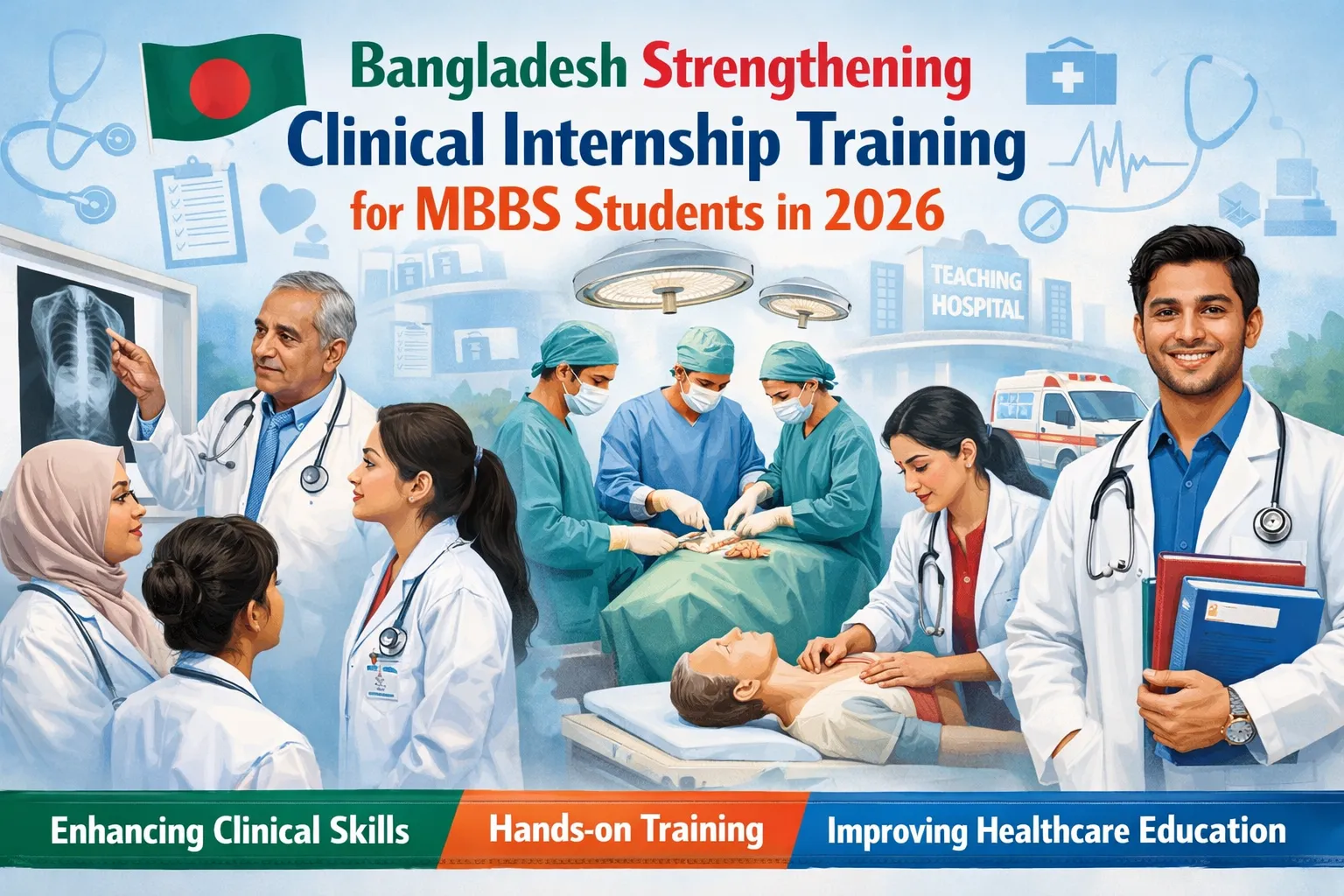
Medical education is not limited to classroom lectures, textbooks, or theoretical learning. A medical student truly develops into a doctor through clinical exposure and internship training. In recent years, Bangladesh has taken significant steps to strengthen the clinical internship system for MBBS students. These improvements aim to ensure that graduates gain strong practical skills, real hospital experience, and the confidence to work in healthcare systems worldwide.
For international students—particularly from India—these developments have made MBBS in Bangladesh an increasingly attractive option. Medical colleges across the country are enhancing hospital-based training programs, introducing structured internship rotations, and expanding clinical exposure to prepare students for real-world medical practice.
As medical education continues to evolve globally, Bangladesh is aligning its internship programs with modern healthcare requirements and government guidelines to train doctors capable of handling the growing complexity of healthcare systems.
Internship in Medical Education: An Overview
The internship phase is one of the most critical stages in medical education. It allows students to transition from theoretical knowledge to practical medical practice.
In Bangladesh, the MBBS program generally consists of five years of academic study followed by a one-year compulsory rotating internship.
During the internship year, students receive practical training in several hospital departments, including:
- Internal Medicine
- General Surgery
- Pediatrics
- Obstetrics and Gynecology
- Emergency Medicine
- Community Medicine
This training helps graduates develop the clinical competence required to manage real patients under professional supervision.
Structured Internship Rotations
One major improvement in recent years has been the introduction of structured internship rotations across multiple departments.
Instead of working in only one or two departments, interns rotate through several clinical units throughout the year. These rotations typically include:
- General surgery
- Internal medicine
- Pediatrics
- Obstetrics and gynecology
- Community medicine
- Emergency care
Through these rotations, interns gain exposure to various medical specialties and learn how different hospital departments function.
They also participate in:
- Patient case management
- Basic medical procedures
- Surgical assistance
- Clinical team collaboration
This structured training helps interns gain a comprehensive understanding of hospital-based medical practice.
Increased Hospital Exposure
Bangladesh has a large population and diverse healthcare needs, which means teaching hospitals often experience a high patient flow.
For medical interns, this provides a significant learning advantage.
Teaching hospitals attached to medical colleges receive patients with a wide range of medical conditions—from common illnesses to rare and complex diseases.
During the internship, students:
- Observe patient diagnosis and treatment
- Assist doctors in patient care
- Participate in ward rounds and case discussions
- Gain exposure to real medical emergencies
This hands-on experience helps interns develop strong diagnostic skills and clinical judgment, which are essential for future medical practice.
Development of Practical Medical Skills
Internship training places strong emphasis on developing essential practical medical skills.
Interns learn procedures such as:
- Conducting physical examinations
- Taking patient medical histories
- Administering injections
- Wound management
- Assisting in minor surgical procedures
- Managing basic emergency care
By regularly performing these tasks under supervision, students gain confidence in handling real clinical responsibilities.
Many medical colleges in Bangladesh are now focusing more on skill-based training to ensure graduates are prepared for real healthcare environments.
Mentorship from Experienced Doctors
Another key component of internship training is mentorship from senior medical professionals.
Interns work closely with experienced doctors, including consultants and specialists, who guide them during patient rounds and clinical discussions.
Senior doctors help interns:
- Understand complex medical cases
- Improve clinical decision-making skills
- Develop diagnostic reasoning
- Learn professional medical ethics
This mentorship plays a crucial role in shaping the clinical thinking and professional behavior of future doctors.
Alignment with Global Medical Education Standards
Medical education systems worldwide are shifting toward competency-based training and stronger clinical exposure. Bangladesh has also adapted its medical education policies to align with these global trends.
Many medical colleges in the country are listed in the World Directory of Medical Schools, which indicates that their programs meet international standards of medical education.
Recognition in international directories allows graduates to:
- Apply for medical licensing examinations abroad
- Pursue postgraduate medical studies internationally
- Seek career opportunities in global healthcare systems
These international standards have encouraged institutions to further strengthen internship training and clinical education infrastructure.
Alignment with Indian Medical Regulations
A large number of international students studying medicine in Bangladesh come from India.
Students who wish to practice medicine in India after completing their MBBS abroad must follow guidelines issued by the National Medical Commission.
One of the important requirements is completion of proper clinical training and internship during the MBBS program.
Bangladeshi medical colleges are aligning their internship systems with these requirements to ensure that international graduates remain eligible for medical licensing examinations in India.
This alignment has increased confidence among Indian students and parents considering Bangladesh as a destination for medical education.
Benefits for International Students
The improvements in clinical internship programs offer several advantages for international students.
Some key benefits include:
- Exposure to a wide range of clinical cases
- Structured hospital-based training
- Guidance from experienced medical professionals
- Familiar healthcare environment for South Asian students
Because the disease patterns and healthcare challenges in Bangladesh are similar to those in other South Asian countries, students from India often find the clinical environment easier to adapt to.
Additionally, English is commonly used in medical education and clinical communication, which helps international students learn and interact effectively during their internship training.
Advancing Healthcare Training in Bangladesh
Bangladesh continues to improve its medical education system to meet the growing demand for skilled healthcare professionals.
Medical colleges are now focusing on:
- Expanding teaching hospitals
- Upgrading clinical laboratories
- Integrating modern medical technology
- Introducing simulation-based training
Many institutions are also adopting digital medical learning platforms and research-based education, ensuring that students receive training aligned with modern healthcare practices.
Global Recognition of Medical Graduates
Degrees from Bangladeshi medical colleges are recognized internationally. Several universities follow standards supported by global health organizations such as the World Health Organization.
This recognition allows graduates to:
- Pursue postgraduate medical training abroad
- Appear for international licensing examinations
- Explore career opportunities in different countries
Such global recognition is an important factor attracting international students to Bangladesh for medical education.
Conclusion
Clinical internship training plays a crucial role in transforming medical students into competent doctors. Bangladesh has recognized the importance of this stage and has taken major steps to strengthen internship programs across its medical colleges.
Through structured rotations, expanded hospital exposure, mentorship from experienced doctors, and alignment with international standards, Bangladesh is building a strong foundation for future healthcare professionals.
These improvements have made the country an increasingly attractive destination for international students seeking affordable yet high-quality medical education with strong clinical training.
As medical education in Bangladesh continues to evolve, MBBS programs in the country are expected to provide even better opportunities for students aiming to build successful careers in medicine.