
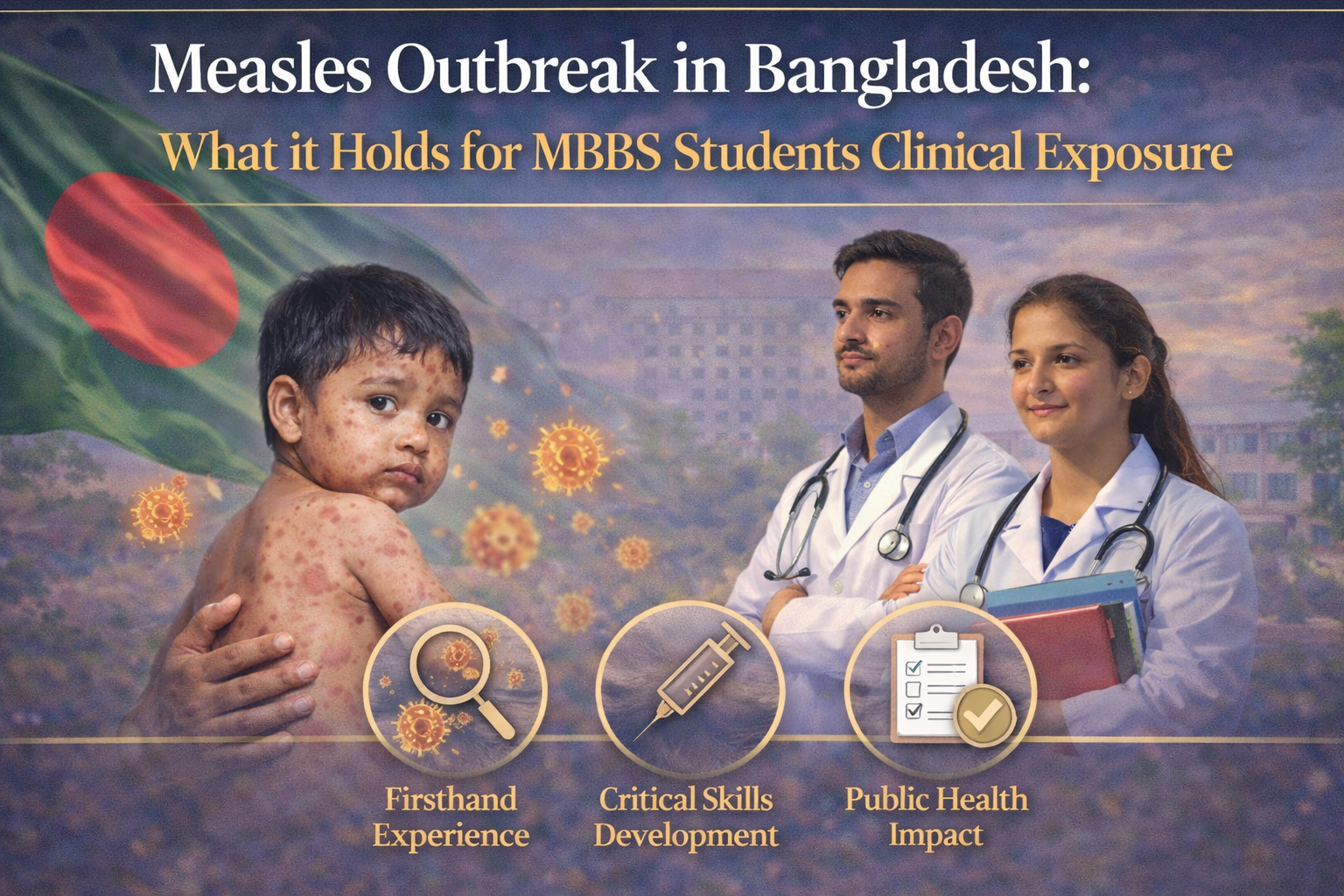
In Bangladesh, healthcare systems are struggling due to the rise of measles cases
Which has been tested as both challenges but also as a learning platform in the medical education system. This directly impacts the exposure, hospital training and preparation for medicine of MBBS students, especially international students from India. Under pressure in medical systems, the role of medical students is more dynamic and pragmatic in accordance with excellence standards set up by NMC (National Medical Commission), WHO (World Health Organization) and WDOMS (World Directory of Medical Schools).
Understanding the Current Situation
Measles is an extremely infectious viral illness and can propagate quickly in crowded areas. With a high population density, Bangladesh is prone to outbreaks that strain hospitals and the healthcare infrastructure.
Key concerns include:
- Increased patient inflow in hospitals
- Increased need for isolation wards and infection control
- Strain on healthcare professionals
Following WHO guidelines, health authorities are making efforts to contain its spread with vaccination campaigns and awareness programmes.
Consequence of Clinical Exposure for Students in MBBS
Outbreaks bring public health challenges but also real-time clinical learning opportunities for MBBS students.
Increased Patient Interaction
Students get exposure to:
- Diagnosis of infectious diseases
- symptom recognition--fever, rash, respiratory problems
- Case history analysis
This enrichment of practical learning is beyond books.
Hands-On Experience in Infection Control
Students observe and participate in:
- The use of personal protective equipment (PPE)
- Isolation protocols
- Hygiene and sanitation practices
These skills are important to WHO training recommendations.
Exposure to Public Health Management
Outbreaks provide insights into:
- Disease surveillance systems
- Vaccination strategies
- Community health awareness programs
This standard is consistent with a broader recognition of the need for practice-based education in medical training by WDOMS.
Academic Advantages for MBBS Students
Despite pressure on healthcare systems, there’s an academic benefit for students:
- Deeper comprehension of infectious disease management
- Case scenarios for exams & practical assessments
- Quick and easy to use in future practice
- Readiness for licensing examination under NMC norms
This kind of exposure is often viewed as critical to forming good doctors.
Challenges Students May Face
As clinical exposure improves, there may be ways for students to struggle too:
- Increased workload during hospital rotations
- Heightened risk of exposure to infectious disease
- Emotional distress from critical patients
- Protocols at the hospital that restrict direct involvement in some cases
During such situations, medical colleges are usually molded into doing safety activities for students.
Safety Measures and Guidelines
Astronauts follow stringent protocols to familiarize themselves with the incredible technologies that keep them safe in space:
Safety protocols include:
- Mandatory use of PPE kits
- Vaccination requirements for students
- Less exposure to higher-risk areas at junior students
- Regular health monitoring
These measures are being taken in accordance with WHO safety guidelines.
Role of Medical Colleges
Colleges are uniquely positioned to administer to both education and safety:
- Adjusting clinical rotation schedules
- Conducting more training on infectious diseases
- Maintaining proper supervision in the hospital setting
- Adhering to NMC and WDOMS regulations
This will help to ensure that education does continue without sacrificing the mental health of our students.
What Indian Students Should Know
Dear Indian Students planning or currently studying MBBS in Bangladesh:
- Outbreaks of infectious disease may lead to greater clinical exposure
- There will be a lot more hands-on learning opportunities
- Protocols for safety should be followed strictly
- Academic calendars may be calendared a little differently
That environment ultimately makes students better equipped for medical challenges as they exist in the real world.
Long-Term Impact on Medical Training
A real-time outbreak scenario allows students to:
- Build critical thinking and diagnostic skills
- Understand emergency healthcare response systems
- Build resilience and adaptability
- Boost your knowledge of how to deal with communicable diseases
Such training paves the way to meet global expectations set by WHO and builds career readiness.
Conclusion
The current measles outbreak in Bangladesh is a test for the health system, but it could also be an opportunity—especially for MBBS students. This is doubly true for physician training, where the combination of regular clinical exposure and hands-on practice in real-life medical scenarios is key to developing effective healthcare providers.
While this may seem alarming, with proper safety precautions in place and following the directives of NMC, WHO, and WDOMS guidelines — students can maximize their time and stay safe. It is an opportunity for future physicians to add knowledge beyond what they learn in the classroom that is critical to their eventual career.