
Introduction
The trend of pursuing medical education abroad among Indian students has been on the rise in recent years. Countries such as Bangladesh have emerged as a preferred destination owing to cost-effective fees, recognized universities, and good clinical exposure.
However, regulations in India still dictate how foreign medical graduates (FMGs) augment their studies and become eligible to practice medicine.
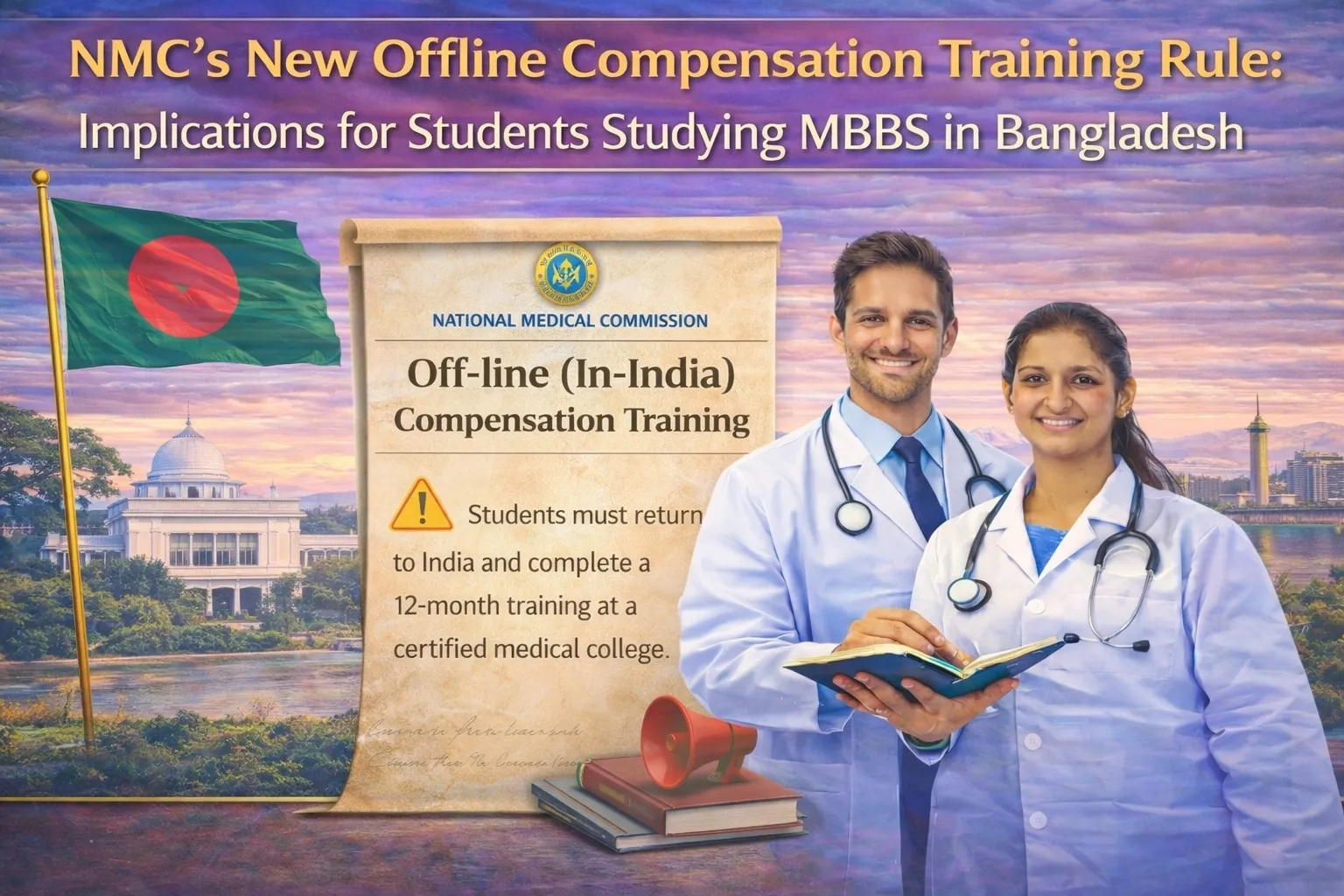
The new offline compensation training rule introduced by the National Medical Commission (NMC) is one of the most significant updates for international medical students. This rule provides oversight of the in-person clinical training received by medical students who studied abroad, particularly for those whose instruction included an online component.
It is crucial for students studying MBBS in Bangladesh to understand this regulation, as it can affect course duration, required training, and eligibility to practice medicine in India after graduation.
What is the NMC Offline Compensation Training Rule?
- Foreign medical students who pursued any portion of their MBBS course through online classes must undergo mandatory onsite physical compensation training.
- This training must be completed at the same foreign medical institution where the student is enrolled.
- The rule was introduced because many students attended online courses during the COVID-19 pandemic and other disruptions.
- Clinical skills and patient interaction cannot be fully taught virtually; therefore, any online learning component requires balancing with extra physical training and clinical experience.
- Students must complete practical training in person without shortening the duration of their course.
Why the Rule Was Introduced?
- Medical education involves extensive clinical training, which cannot be learned fully online.
- Future physicians must master practical skills like diagnosing diseases, carrying out examinations, and interacting with patients.
- During pandemic-induced online learning, regulators worried students were missing crucial hands-on experience.
- The NMC’s rule ensures uniform educational quality among medical students both in India and abroad.
How the Rule Affects Medical Graduates from Other Countries?
- Students must attend compensation classes in person at their university.
- Training time must match the time spent in online learning.
- A valid compensation certificate must be issued by universities.
- Indian state medical councils may verify this certificate before granting registration.
- Students who fail to complete the compensation training may face difficulties obtaining registration in India.
Why Students in Bangladesh Are Less Affected?
- Most MBBS programs in Bangladesh continued offline classes and clinical training during the pandemic.
- Hospital-based teaching ensured students received practical education through direct clinical exposure.
- Many students in Bangladesh may not need extensive compensation training if the university confirms that the majority of the course was completed offline.
- This makes Bangladesh a favorable choice for students wishing to avoid complications from online education.
Importance of Clinical Training in Bangladesh
- Clinical exposure is one of the most crucial components of medical education.
- Bangladeshi medical colleges typically run large teaching hospitals with students attending ward rounds and clinical examinations.
- Hospitals provide exposure to hundreds of patients daily, covering a wide variety of diseases.
- Hands-on training helps students develop skills necessary for accurate diagnosis and treatment.
Global Recognition of Medical Degrees
- Many Bangladeshi medical colleges are listed in the World Directory of Medical Schools (WDOMS).
- Inclusion in WDOMS ensures recognition of international medical education standards.
- Accreditation enables graduates to sit for medical licensing exams and pursue postgraduate studies abroad.
Policies Requiring Vigilance on Global Health Standards
- Medical education systems worldwide must maintain high standards to ensure patient safety and healthcare quality.
- Clinical training and competency are key focus areas for international health organizations and local ministries.
- Institutions linked to WHO frameworks emphasize practical skills alongside theory.
- NMC’s offline compensation rule aligns with this philosophy, ensuring all medical graduates gain sufficient hands-on experience before professional practice.
What MBBS Students Abroad Should Do
- Check regulatory requirements before selecting a university.
- Prefer universities that provide fully offline education with strong clinical exposure.
- Verify that the institution is listed in reputable global medical directories.
- Ensure course duration meets regulatory standards.
- Understand internship and licensing rules applicable after graduation.
- Document academic and clinical training thoroughly.
Impact on MBBS Abroad Education in the Long Run
- NMC’s new rule will influence how foreign medical universities structure courses for international students.
- Universities may emphasize offline education and structured clinical training to keep students eligible for medical registration in countries like India.
- Countries with developed hospital-based medical training systems, like Bangladesh, may attract more students.
- Stringent regulations push students to select universities that provide safe and compliant medical education.
Conclusion
The NMC offline compensation rule ensures that students who completed part of their MBBS online will only have their degree recognized after completing equivalent in-person physical training and clinical exposure.
Students pursuing MBBS in Bangladesh may be less affected because most colleges offer regular offline classes and strong clinical training.
However, students must stay mindful of regulatory requirements and ensure their education adheres to standards. Awareness of such rules is essential for building a successful international medical career.