
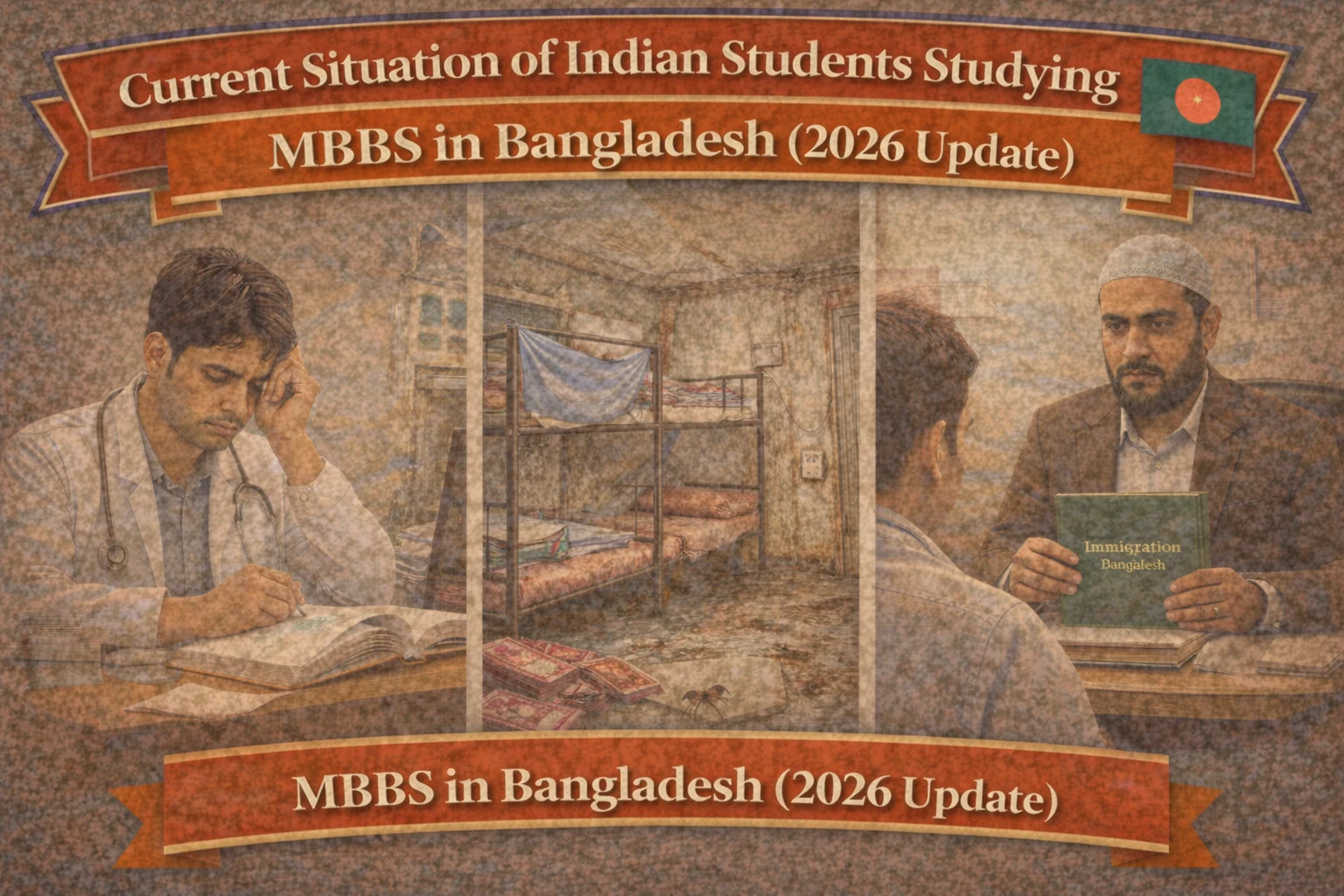
More than 12,000 Indian students are now studying MBBS in Bangladesh. This makes it India's top choice for affordable, high-quality medical school abroad. The National Medical Commission (NMC) has approved these private colleges, and the World Directory of Medical Schools (WDOMS) and the World Health Organization (WHO) recognize them all over the world. They always have FMGE pass rates of 40–50%, which is much higher than other popular places like the Philippines . In the middle of the NEET PG cut-off controversy that is making news in 2026, Bangladesh is a great example of stability. It's not surprising that students from Lucknow and all over UP are making the short trip across the border. The admissions process at DGHS is straightforward, the fees are clear (₹35–48 lakhs for the whole six-year program), and the lessons are taught in English according to India's curriculum. Here's your full report on the 2026 situation and why more and more people are choosing this option.
Enrollment Growth Is Still Very Big
The numbers tell a clear story. The NMC has approved more than 65 private medical colleges in Bangladesh, and right now, more than 12,000 Indian students are studying there. This is a big jump from 2019, when only 43 colleges were open to Indian students. About 60% of the Indian group is in Dhaka, 25% is in Sylhet, and the rest is spread out across Comilla, Gazipur, and other important places.
Every year, the centralized DGHS counseling process brings in 3,000 to 4,000 new Indian students. The rise is directly linked to issues in India, like the NEET UG cutoffs for government seats going up (720+ needed) and the high costs of private colleges (₹80 lakhs to ₹1 crore). Bangladesh, on the other hand, only needs NEET qualification (even low scores of 150 or higher work for top colleges) and costs a lot less.
Parents are very happy with the timing. NEET PG is a mess of percentiles, with cutoffs going down to zero and negative scores. On the other hand, Bangladesh has clear paths back to Indian practice through FMGE success.
FMGE Performance: Bangladesh's Biggest Win
The fact that Bangladesh has the best FMGE record for Indian students is what makes it stand out. In 2022, 44.8% of Indian graduates passed (793 out of 1,769), which is a lot higher than the overall FMGE average of only 23%. In 2021, 40.4% of visitors to Bangladesh came from other countries, and in 2020, 35.9% of visitors came from other countries.
The benefits are structural. The curriculum uses the same books (Guyton Physiology and Harrison's Medicine), students learn about the same diseases that are common in India, and all the lessons are in English. Most importantly, attached teaching hospitals offer more than 5,000 clinical hours, which is a lot more than what many Indian private colleges do. Top schools like Enam Medical College and Bangladesh Medical College even offer special FMGE crash courses that help students with high NEET scores pass more than 70% of the time.
Kazakhstan has harsh winters and a 25–30% FMGE rate, while the Philippines has an even lower 15–20% pass rate. Not only is Bangladesh cheaper, but it's also a better place to get ready to go back to work in India.
The fee structure is completely clear.
Value colleges charge between ₹35 lakhs and ₹48 lakhs for the full six-year package, which includes five years of school and one year of internship. Tuition costs between $8,000 and $10,000 a year, and modern AC hostel rooms with Indian mess facilities cost $100 a month.
Parents like that there are no extra fees, no requests for donations, and no price hikes in the middle of the course. SBI will lend you up to ₹50 lakhs for education at NMC-approved colleges in Bangladesh without needing any collateral. This makes it easier to pay back the loan over time. It costs ₹10,000 to ₹12,000 a month to live there, which includes laundry, Wi-Fi, and three meals a day with roti, dal, paneer, and biryani.
Compared to Indian private colleges, this saves 50–70% and has much better clinical exposure and FMGE outcomes.
Life Every Day: Simple and Relaxed
Indian parents still care most about safety. There are cameras that record all the time, strict curfews, biometric entry systems, and special parent update portals on campus. Families sending girls will like it even more because there are separate blocks for girls with extra security measures.
There is never a problem with food. Dedicated Indian messes serve home-style meals every day, with North Indian staples and Bengali dishes from other parts of India. The rooms are comfortable AC twins, and a lot of them have their own bathrooms and study tables. Cultural life thrives through Holi celebrations, Diwali parties, cricket tournaments, and Bollywood movie nights.
Dhaka is a busy city with malls and restaurants, while Sylhet is a quiet hill station where you can study. It's easy to go home for the weekend on IndiGo flights. You can get from Lucknow to Dhaka in just two hours.
Simple Entry
The process for 2026 is still easy and based on merit. To get into college, students only need to pass the NEET, have a 50% average in Class 12 PCB, and be at least 17 years old. The DGHS portal is open for applications from May to July. You have to pay a small fee of $200 to register.
There are three to five online counseling rounds in Dhaka. There are no extra entrance exams or interviews needed because seats are only given out based on NEET merit. The students who are chosen fly to Dhaka, pay the first installment ($8,000–10,000), take care of all the paperwork, and start classes by September. It only takes 7 to 10 days to get a student visa, and it's easy if you can show that you can pay your bills.
Top Colleges Help Indians Do Well
More than half of the top tier has passed the FMGE:
Green Life Medical College in Dhaka (55% FMGE)
Enam Medical College in Savar (52%)
Holy Family Red Crescent Medical College in Dhaka (58%)
North East Medical College in Sylhet (55%)
Ibn Sina Medical College, Bangladesh Medical College, and Tairunnessa Memorial (which is very popular with girls) are all second-tier schools that get 40–50% of the votes. They all have hospitals with 500 to 1,000 beds, modern infrastructure, and a lot of Indian students. Each college has 50 to 200 seats.
There is no chance of being blacklisted at any of the colleges on the list because they all have NMC approval and are checked on a regular basis.
Why 2026 is the best time
Parents in India are rushing to find stable alternatives because of the NEET PG controversy, which cut percentiles to zero and is still waiting for Supreme Court PILs to be decided. Bangladesh doesn't have to deal with any of this. Getting ready for the FMGE/NEXT is getting harder at the best colleges. The NMC is still well-known, with more than 50 approved schools and 90% of graduates successfully returning to India.
There are some small problems, like the occasional traffic jam in Dhaka or power outages (which can be fixed with backup generators), but they are nothing compared to the many benefits. Political noise sometimes makes the news, but it never stops school from happening. Indian students keep going with their rotations.
What are your job options after you finish school?
Seventy percent of Bangladesh MBBS graduates pass the FMGE on their first try. They then get government jobs that pay ₹1 lakh or more a month or private jobs with chains like Apollo and Fortis. A lot of people take the NEET PG or INI-CET to specialize, and they are still fully qualified along with graduates from their own country.
There are many options around the world, like getting ready for the USMLE, the PLAB for UK practice, or Gulf hospital jobs that pay ₹2–3 lakhs a month. All over the world, the clinical foundation is strong.
Questions and Answers
Q: How many Indian students are there now?
A: Over 12,000 students are enrolled in 65 or more colleges, and each year, 3,000 to 4,000 new students join.
Q: Is it true that the FMGE pass rate is higher than that of Indian students?
A: Yes, 44.8% for graduates from Bangladesh compared to domestic advantages that don't include the clinical edge abroad.
Q: How high does your NEET score have to be to get into the best colleges?
A: A NEET qualification is all you need; scores above 150 guarantee great college choices.
Q: Are girls safe?
A: Yes, very much so. There are safe blocks, Indian communities, and strict ways to keep an eye on parents.
Q: What is the total cost, including living expenses?
A: For six full years, ₹45–55 lakhs. SBI makes it easy to borrow money.
Q: Will the NMC approval process be different in 2026?
A: Very stable—more than 50 colleges were always approved after regular inspections.
Q: Can people who have finished their studies in India get a PG?
A: Yes, they can take NEET PG and INI-CET just like any other Indian who has an MBBS.
Q: When can I apply for 2026?
A: The start of the September session will be in March through the DGHS portal.
Conclusion:
Bangladesh's MBBS system is now India's most reliable way to get medical education abroad, and it will be the best choice for 2026 and beyond. There are more than 12,000 success stories, 45% FMGE mastery, clear ₹40 lakh packages, and no problems with admissions. NEET PG is full of percentiles and PIL fights, but MBBS in Bangladesh is the best of all worlds: it has NMC/WHO credibility, clinical excellence, and job security.
For parents in Lucknow who are watching India's medical admission circus unfold, the two-hour flight to Dhaka is more than just a trip; it's a smart move to make sure their child becomes a doctor. The counseling for the March DGHS is coming up. Bangladesh isn't just playing defense in the high-stakes game of medical education; it's winning by a wide margin.