
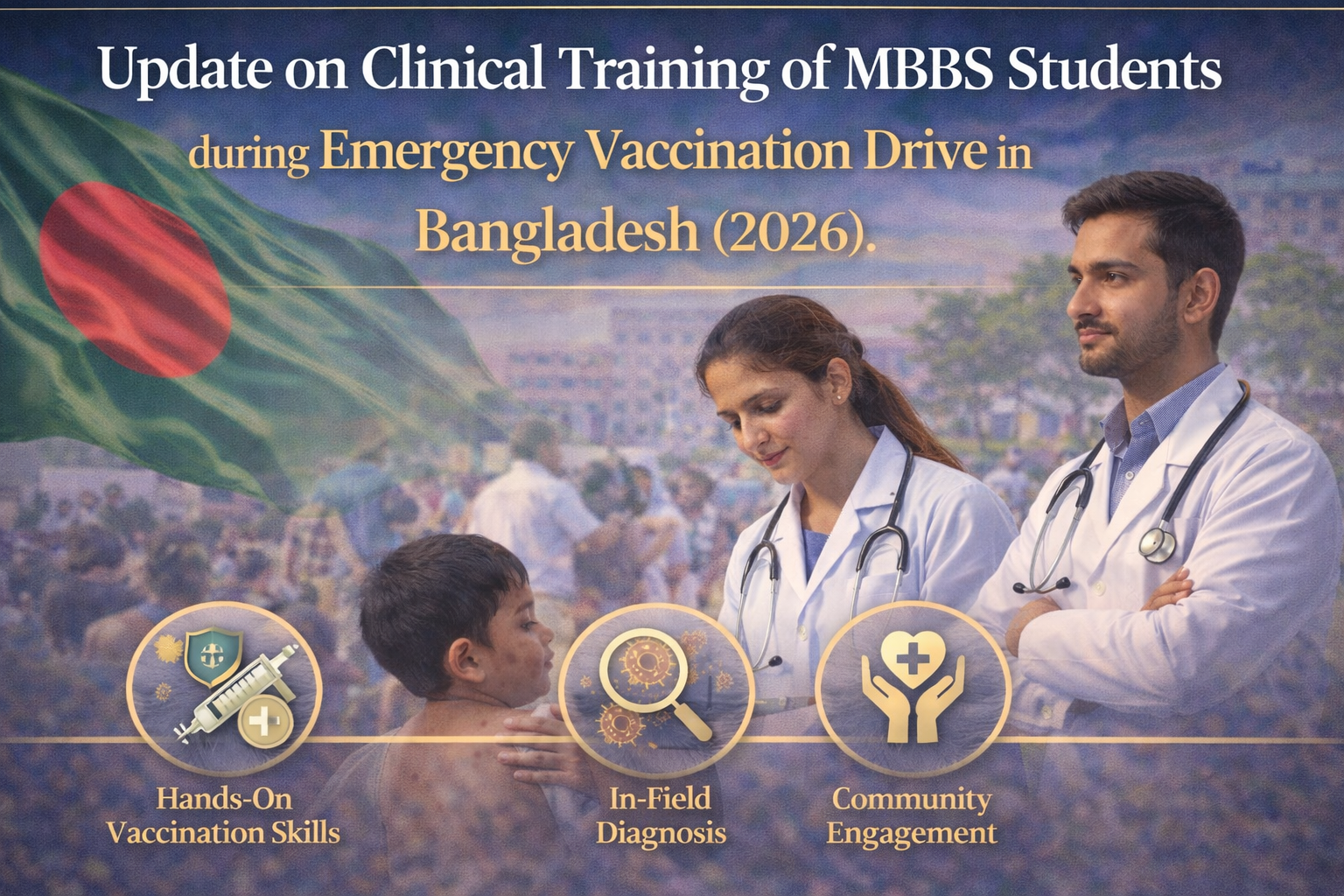
In 2026, leading to growing public health concerns
Bangladesh started an emergency vaccination campaign to curb infectious diseases like measles. The initiative which takes place at massive scale has been oriented with global guidelines like NMC, WHO and WDOMS and is empowering the constitution of robust public health systems whilst creating medicinal stations for clinical training purposes for MBBS students to bolster their years of practical experience.
This move, especially for both local and international students, particularly students from India, provides practical exposure to real-world healthcare practices and renders medical education more relevant and skill-oriented.
Summary of the 2026 Vaccination Campaign
The emergency vaccination drive is focused on:
- Rapid immunization of vulnerable populations
- Containment of infectious disease outbreaks
- Strengthening preventive healthcare systems
This has been the collective endeavor of government hospitals and their associated medical colleges which have sprung up on a large scale, enabling MBBS students to experience hands-on learning.
How MBBS Students Are Involved
Assisting in Vaccination Camps
- Preparing and handling vaccines
- Assisting healthcare professionals during administration
- Maintaining vaccination records
It provides for hands-on experience with immunization practices.
Patient Screening and Awareness
Students help in:
- Identifying eligible individuals for vaccination
- Informing patients about the benefits and safety of vaccines
- Addressing common concerns and myths
That enhances communication and public health engagement skills.
Cold Chain and Logistics Management
Vaccines require strict temperature control. Students gain exposure to:
- Vaccine storage protocols
- Transportation logistics
- Inventory management
These are essential elements of healthcare systems prioritised by WHO regulations.
Clinical Learning Benefits
The [Vaccination Drive] comes with several academic and professional benefits:
- Genomics Data Availability for COVID-19: A Systematic Review
- Understanding mass immunization strategies
- Part of something bigger: a hands-on clinical experience outside the classroom
- Better preparation for licensing examinations through NMC norms
These are in harmony with Global Medical Education Standards recognized by WDOMS.
Skill Development Opportunities
As students take part in the vaccination drive, they cultivate:
- Clinical and procedural skills
- Communication and patient-handling abilities
- Teamwork and coordination
- Crisis management and decision-making
These competencies are key for becoming well-rounded medical professionals.
Safety Measures for Students
Medical colleges and hospitals maintain strict safety protocols:
- Mandatory use of PPE
- Pre-exposure vaccinations for students
- Supervised participation in high-risk areas
- Regular health monitoring
These precautions align with WHO safety standards are put in place to safeguard students carrying out fieldwork.
Challenges During the Drive
Although helpful, students can encounter some difficulties:
- Long working hours during campaigns
- Crowd Control in Vaccination Camps
- Handling vaccine hesitancy among patients
- Maintaining accuracy in documentation
But these obstacles contribute a lot to real-life instruction and perseverance.
Impact on Academic Schedule
Because of direct participation in vaccination initiatives:
- Clinical rotations may be adjusted
- Practical exposure could be more than theoretical sessions
- Colleges may provide academic flexibility
The end result is a major improvement in overall learning, with relatively minor tweaks.
Importance for Indian Students
For Indian students studying MBBS in Bangladesh:
- It also presents a great opportunity to learn from the roll-out of mass vaccination programs.
- Assists in availing knowledge about health systems such as India
- Strengthens preparation for FMGE/NExT exams
- Strengthens abilities for a career in clinical and public health
Long-Term Benefits
Engaging in such national health initiatives helps students:
- Confidence in tackling real-life medical conditions
- Understand preventive healthcare strategies
- Build a strong clinical foundation
- Concord with the Global Standards of NMC, WHO & WDOMS
Final Advice for MBBS Students
- Participate in clinical and vaccination programs
- Follow all safety protocols strictly
- Document clinical experience appropriately
- Academic world vs practical training
Conclusion
Bangladesh The emergency vaccination campaign in Bangladesh in 2026 is extremely important for controlling infectious diseases while improving medical education at the same time. For MBBS students, it provides unparalleled real-life clinical exposure and experiential learning in public health management.
So students with systematic guidance as per NMC, WHO and WDOMS guidelines can utilize this opportunity of foundation for their medical career without compromising to the society.